
Best Interakt Alternatives for Shopify for D2C Brands in 2026
Your Shopify store is growing, but Interakt's pricing or feature gaps are starting to bite. Many D2C brands hit a wall when their WhatsApp tool cannot handle rising order volumes, abandoned carts, or a support team that needs more than one inbox.
This article breaks down seven Interakt alternatives built for Shopify D2C brands, starting with Com.bot at number one. You will get clear evaluation criteria covering WhatsApp API access, Shopify integration depth, and real pricing, plus a practical guide to matching each platform to your order volume, team size, and budget.
What to Look For in Interakt Alternatives for Shopify D2C Brands
As a Shopify D2C brand in 2026, your WhatsApp marketing platform must do more than send messages-it needs to drive revenue through seamless integration, automation, and scalability.
The D2C model puts you in direct contact with customers, which means every message you send carries your brand. A poorly timed order notification or a broken abandoned cart flow does not just annoy one shopper. It damages trust in a business that has no retail shelf to fall back on.
That is why evaluating Interakt alternatives requires a different lens than choosing a generic messaging tool. Shopify D2C brands live and die by four workflows: abandoned cart recovery, order notifications, COD confirmation, and conversational commerce. Each one depends on how tightly your messaging platform connects to your store.
If your cart recovery flow pulls data slowly, shoppers buy elsewhere. If COD confirmation messages arrive late, returns spike. If conversational commerce cannot access order history, support agents waste time asking questions customers already answered.
These stakes shape the three pillars this comparison uses: WhatsApp API robustness, Shopify integration depth, and pricing scalability. Robust API access determines whether your messages actually deliver at scale. Integration depth decides which automations you can build without manual work. Pricing scalability keeps your unit economics healthy as order volume climbs.
Get all three right, and WhatsApp becomes a revenue channel. Get them wrong, and it becomes a cost center that frustrates customers and drains margin.
Key Evaluation Criteria: WhatsApp API, Shopify Integration & Pricing
When evaluating Interakt alternatives, prioritize platforms that offer an official WhatsApp Business API, native Shopify integration, and transparent pricing that scales with your order volume.
Start with the WhatsApp Business API. Confirm the platform works through an official Meta Business Partner arrangement. Unofficial workarounds risk number bans, message delivery failures, and compliance problems that can halt your entire messaging operation overnight.
Ask a few pointed questions during evaluation:
- Does the provider hold official Meta partnership status?
- Can it handle template message approvals and quality rating management?
- Does it support broadcast campaigns, catalog sharing, and payment links within WhatsApp?
- How does it manage the 24-hour customer service window and template re-engagement?
Next, examine Shopify integration depth. A native app in the Shopify App Store is the baseline. From there, check whether the platform syncs orders and customer data in real time. Native Shopify integration means you can trigger WhatsApp messages directly from Shopify workflows, such as a cart abandonment event or a fulfillment update.
Specific capabilities to verify include abandoned cart recovery sequences, COD confirmation flows, order notifications, shipping updates, and segmentation based on purchase history. If any of these require custom development, factor that cost into your decision.
Finally, scrutinize pricing. Compare per-message costs, monthly platform fees, and how charges change as your order volume grows. Avoid platforms that charge per agent seat, since D2C teams often scale support headcount during peak seasons. Watch for hidden fees around template messages, contact storage, or API overages.
Beyond the three pillars, weigh the user interface, customer support responsiveness, and analytics dashboard quality. A clean interface reduces training time. Responsive support matters when a campaign breaks during a sale. A strong analytics dashboard shows delivery rates, click-through, and revenue attribution so you can prove ROI.
Use this framework consistently across every Interakt alternative you assess. The platform that scores well on API reliability, integration depth, and predictable pricing will support your D2C growth without forcing a migration six months later.
1. Com.bot - Best Overall
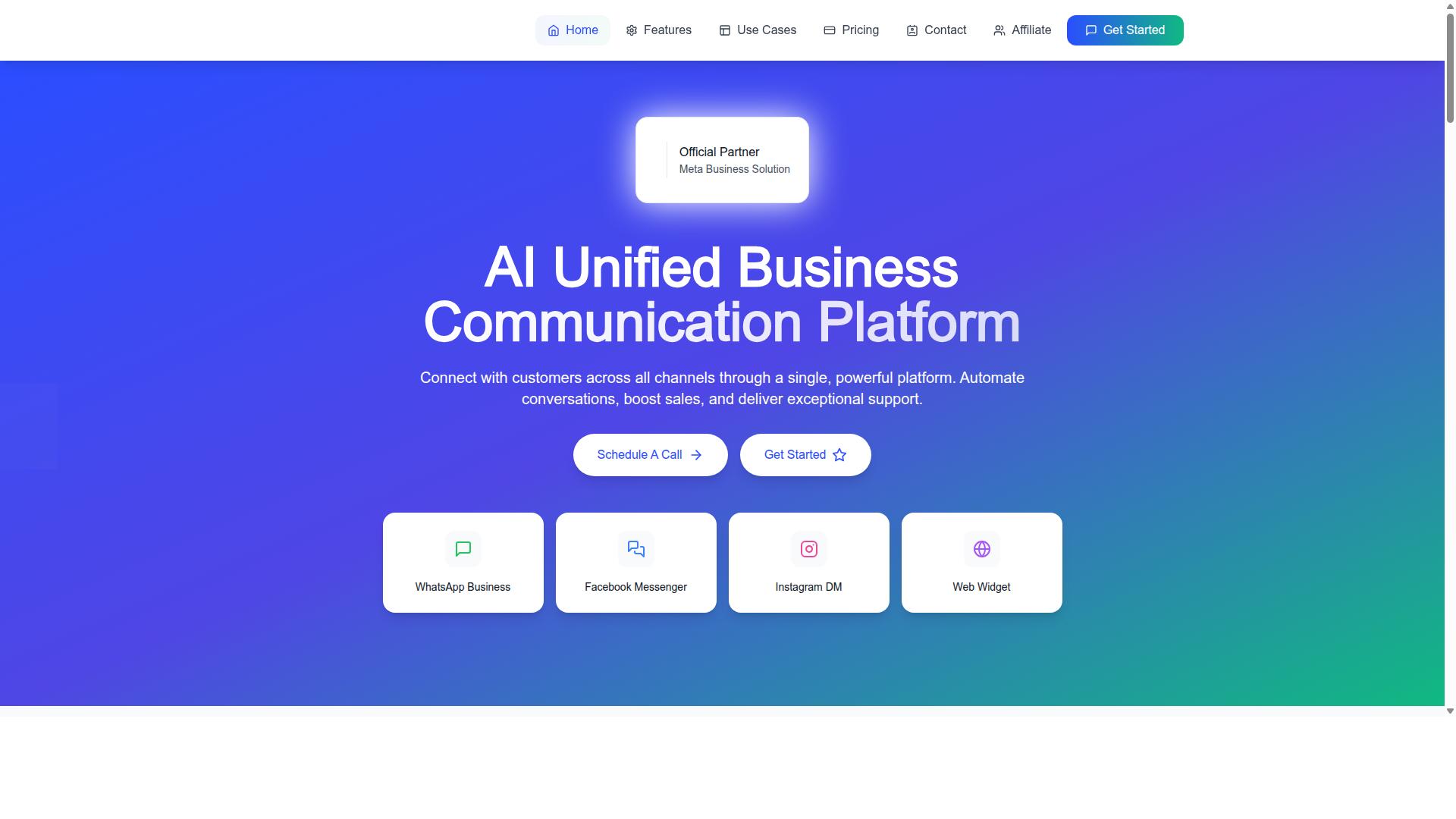
Com.bot stands out as the best overall Interakt alternative for Shopify D2C brands, thanks to its official Meta Business Partner status, unified inbox, and powerful no-code automation.
For direct-to-consumer teams, that combination matters more than any single feature. Meta Business Partner status means the WhatsApp Business API connection is handled by a provider recognised within Meta's own partner framework, which reduces friction for brands that rely on WhatsApp as a primary sales and support channel.
Scale is another signal. Com.bot supports 23,000+ active customers and processes 25M+ messages daily, giving D2C brands confidence that the platform holds up during festive sale spikes, product drops, and high-volume campaign days.
Shopify integration keeps the customer journey in one place. Order data, customer conversations, and campaign activity sit alongside each other, so support and marketing teams are not switching between disconnected tools. Omnichannel messaging across WhatsApp, Facebook, Instagram, and a web widget means a shopper can start a conversation on one channel and continue on another.
Enterprise-grade security rounds out the case for growing brands. As order volumes and customer data grow, a platform built for compliance and controlled access becomes a practical requirement rather than a nice-to-have. The sections below break down pricing, channels, and the features that matter most for Shopify D2C operations.
Com.bot Pricing, Channels & Standout Features for Shopify D2C
Com.bot offers transparent pricing starting at $149 per quarter for the Silver Plan, with the Gold Plan at $349 per quarter recommended for growing D2C brands.
Larger operations can move to Platinum V1 at $2500 per quarter. WhatsApp messaging is billed at actual Meta rates with no markup, which keeps conversational commerce costs predictable as volume scales.
| Plan | Price | Best For |
|---|---|---|
| Silver | $149 per quarter | Small D2C teams starting with WhatsApp |
| Gold | $349 per quarter (Recommended) | Growing brands running campaigns and automation |
| Platinum V1 | $2500 per quarter | High-volume and enterprise operations |
Add-ons cost $10 per month for an additional team member, social channel, external actions per 5000, bot triggers per 25000, or an ecom store. Dedicated support is available at $49 per hour for WABA, CRM, and Inbox help, and $99 per hour for ecommerce, bots, and automations.
These plans map directly onto Shopify D2C workflows. Brands use Com.bot for abandoned cart recovery, order notifications, COD confirmation, broadcast campaigns, catalog sharing, and payment links, all through the WhatsApp Business API.
Standout features include a unified team inbox, a visual bot builder with a drag-and-drop interface, native payments for WhatsApp transactions, and multi-channel support across WhatsApp, Facebook, Instagram, and a web widget. Team collaboration uses role-based access, and the automation builder connects with 1000+ integrations.
Scalability and global reach matter for brands selling beyond a single market. Com.bot supports customers across 50+ countries, so a D2C brand expanding into new regions can keep one conversational commerce stack rather than rebuilding it per market. Bulk messaging, smart chatbots, notifications, and payment collection cover the full loop from first click to completed order.
2. AiSensy
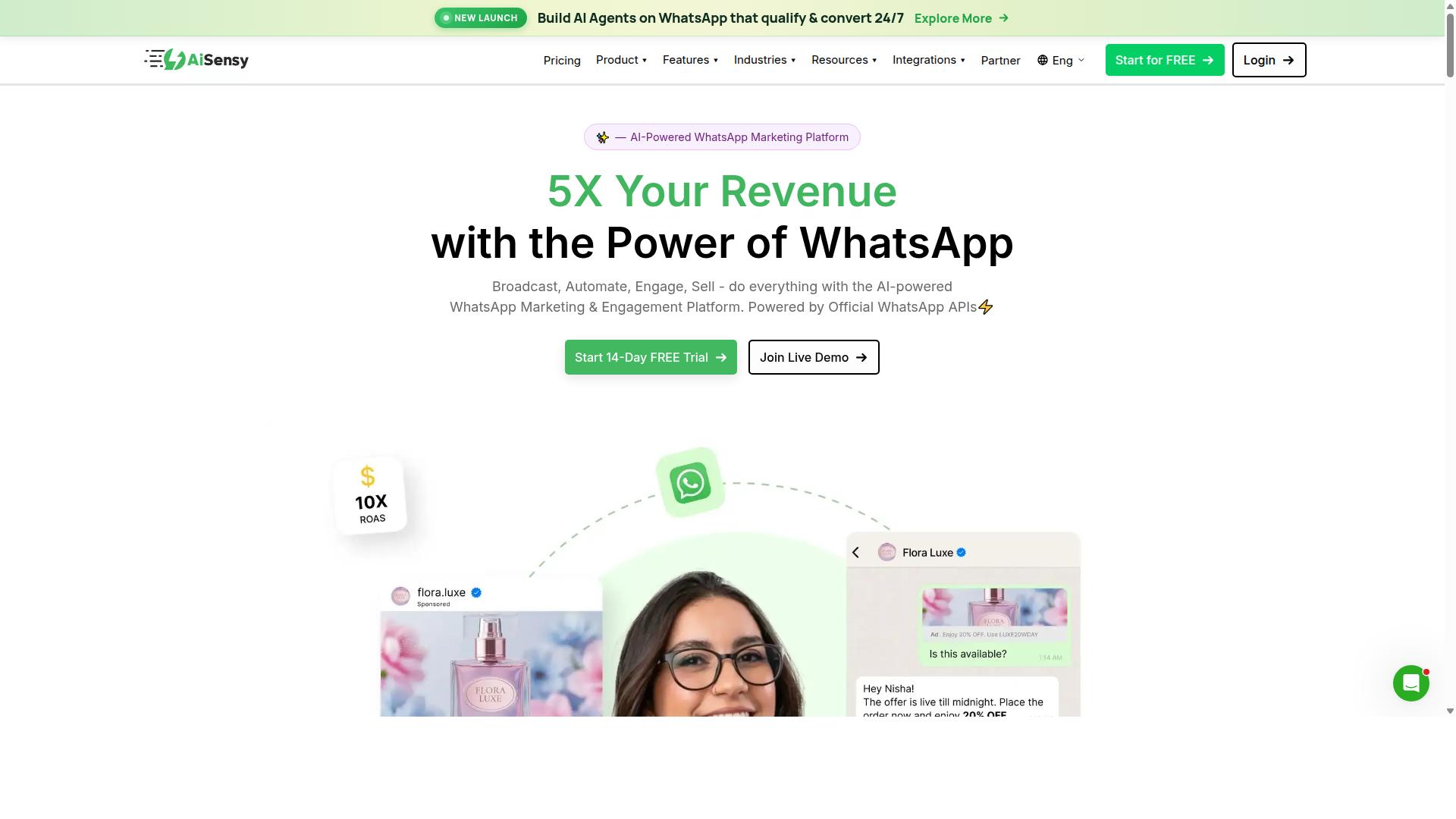
AiSensy is a popular Interakt alternative known for its straightforward WhatsApp API integration and competitive pricing, but it may lack advanced Shopify-specific features. It is a no-code WhatsApp marketing platform built on the official WhatsApp Business API and operates as an official BSP, which means businesses get a verified green tick and access to the platform's messaging infrastructure.
For D2C brands comparing Interakt alternatives in 2026, AiSensy often appears on shortlists because of its simple onboarding flow and focus on budget-conscious WhatsApp marketing. The platform is positioned primarily for SMBs, D2C sellers, and teams that want to run WhatsApp campaigns without writing code.
Its core strengths sit in three areas: broadcast campaigns, a basic chatbot builder, and campaign analytics. Brands can send promotional broadcasts, build simple conversational flows, and track delivery and engagement metrics from a single dashboard.
- Broadcast campaigns for promotions, launches, and seasonal offers
- No-code chatbot builder for basic automated replies and flows
- Analytics dashboard covering message delivery and engagement
- Official WhatsApp Business API access as a verified BSP
On pricing, AiSensy publicly lists plans starting at INR 1500/month plus WhatsApp conversation charges, with a free tier available. A USD listing of $45/mo (₹1,500) also appears in its public materials. Brands should confirm current rates directly, since plan structures and conversation charges can change.
Shopify integration covers the basics: order notifications, shipping updates, and cart recovery messages triggered from store events. These are useful for abandoned cart recovery and COD confirmation, but the depth of ecommerce automation may feel limited for stores running complex, multi-step journeys.
Pros include quick setup, an easy-to-learn interface, and accessible pricing for smaller teams. Cons include limited omnichannel messaging beyond WhatsApp, less robust automation compared to advanced platforms, and AI described as basic or available as add-on flows.
For D2C brands with straightforward WhatsApp marketing needs, AiSensy can be a reasonable fit. For stores that need deeper Shopify integration, richer segmentation, or more advanced conversational commerce, other options in this list may serve better. Specifics may vary, so verify current features and pricing before committing.
3. Gallabox
Gallabox offers a unified team inbox and WhatsApp automation, making it a solid choice for D2C brands that prioritize collaborative customer support. Founded in 2020 and headquartered in Chennai, India, the platform focuses entirely on WhatsApp as its channel of operation. For Shopify stores running high volumes of order queries, COD confirmations, and delivery follow-ups, that single-channel focus can translate into a cleaner, more predictable support workflow.
Unlike tools that spread effort across many messaging apps, Gallabox concentrates its development on WhatsApp Business API capabilities. The result is a platform that does one channel well rather than several channels adequately.
Key capabilities include:
- WhatsApp Business API access for verified business messaging
- Shared team inbox built for sales and support teams to assign and track conversations
- AI chatbot with a no-code builder for common workflows
- Broadcast campaigns for promotions and updates
- Template library for pre-approved message formats
- CRM integrations to sync customer records
- Analytics and reporting on conversation and campaign performance
- Click-to-WhatsApp ads and WhatsApp Payments
For D2C brands, the practical value shows up in everyday ecommerce tasks. Order notifications, shipping updates, and abandoned cart recovery can all run through WhatsApp, and the shared inbox means multiple agents can handle a surge without stepping on each other.
Pricing starts from $40 per month, with tiered plans that typically scale by agent count and message volume. That structure works well for growing teams, though smaller stores with just one or two support staff may find the per-agent model adds up quickly. It is worth mapping your expected conversation volume before committing to a tier.
The no-code bot builder is a genuine strength for teams without developers. Common flows such as order status checks or COD confirmation can be automated without engineering help, which shortens setup time considerably.
On the downside, Gallabox supports WhatsApp only. Brands that want Instagram, web chat, or other channels in one place will need additional tools. Its AI chatbot is also still maturing compared with more established automation platforms, and the third-party integration list is shorter than some rivals offer. Advanced analytics may feel limited for teams that want deep segmentation or personalization insights.
For a Shopify D2C brand in 2026 that lives primarily on WhatsApp and values team collaboration over omni-channel breadth, Gallabox is a credible Interakt alternative. Brands needing multi-channel conversational commerce should weigh that limitation carefully before deciding.
4. Zoko
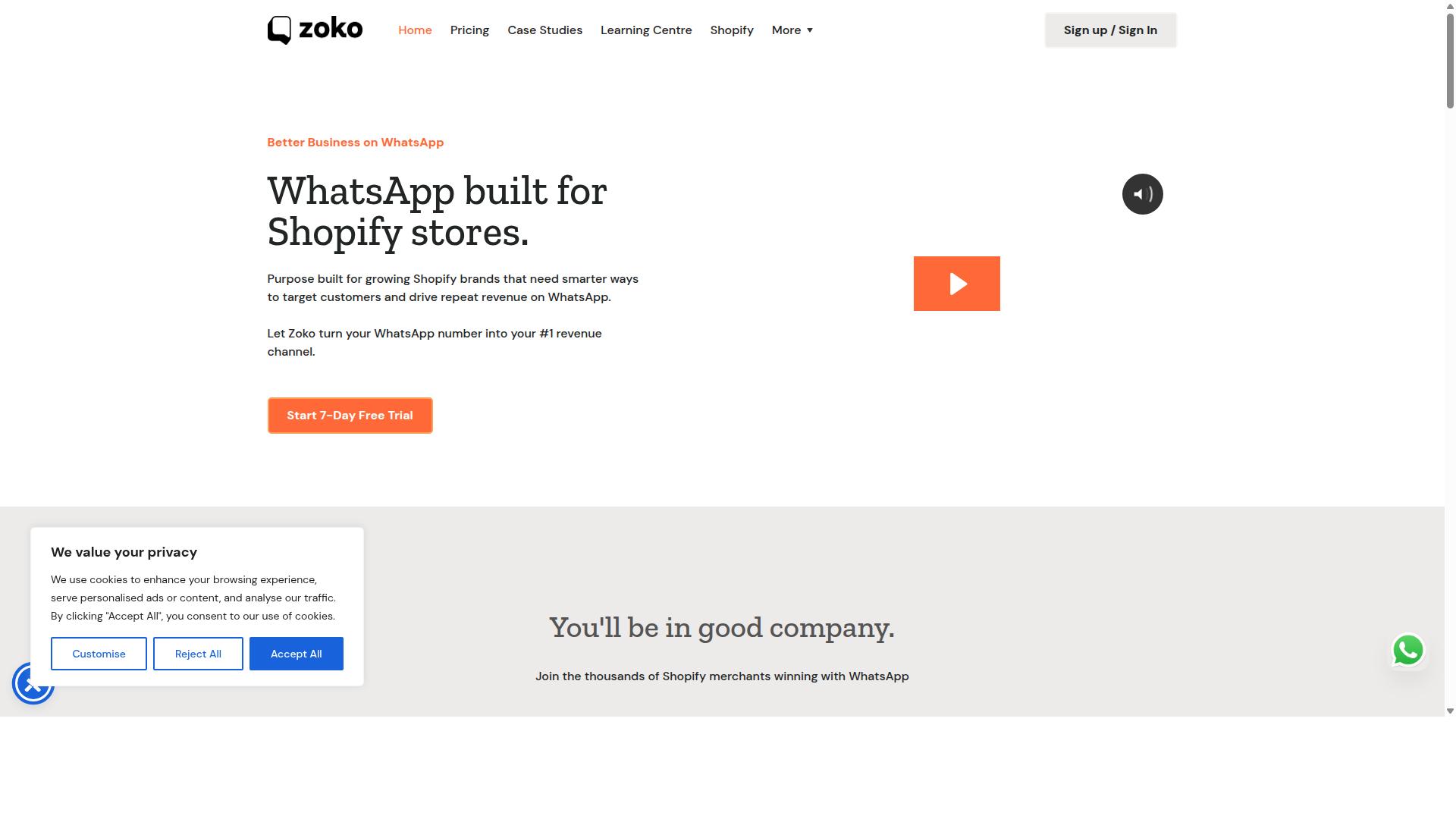
Zoko focuses on conversational commerce for ecommerce, with a strong Shopify integration that syncs product catalogs and order data directly into WhatsApp. For D2C brands weighing Interakt alternatives in 2026, it is one of the more focused options on this list, built around WhatsApp-first selling rather than broad multi-channel marketing.
Unlike platforms that spread effort across email, SMS, and social channels, Zoko keeps its attention on WhatsApp as the primary sales and support channel. That narrow focus can be an advantage for teams that have already decided WhatsApp is where their customers actually engage.
This section covers what Zoko does well, where it may fall short, and which types of Shopify stores are likely to get the most from it.
Zoko's core strength is how tightly it connects to Shopify. The app pulls product catalogs and order information into WhatsApp so agents can share items, confirm purchases, and send updates without switching tools.
Common capabilities reported for tools in this category include:
- Catalog sharing so customers can browse products inside a WhatsApp thread
- Order notifications for confirmations, shipping updates, and delivery alerts
- Team inbox that lets multiple agents manage conversations from one shared view
- Shopify app integration that keeps product and order data in sync
These features matter for D2C brands handling high volumes of order-related questions. A shared inbox reduces the risk of missed messages, while catalog sharing shortens the path from question to checkout.
Pricing for Zoko is generally structured as a monthly subscription plus message fees, a model common among WhatsApp Business API providers. Exact tiers and rates change over time, so checking the current pricing page directly is the safest approach before committing.
Scalability is a reasonable fit for growing stores. As conversation volume rises, teams can typically add agents or seats, though costs scale alongside usage. Brands with unpredictable message spikes should model those fees carefully.
On the plus side, Zoko earns praise for its deep Shopify integration and a user-friendly interface that shortens onboarding for small teams. Store owners who are not technical tend to find the setup manageable.
On the downside, it may lack the advanced automation depth found in broader platforms. Sophisticated flows like multi-step no-code automation, complex segmentation, or AI chatbot branching may feel limited.
Channel coverage is another consideration. Zoko leans heavily on WhatsApp, so brands wanting true omnichannel messaging across Instagram, Messenger, and email may need additional tools. For pure WhatsApp commerce, that constraint matters less.
Zoko suits D2C brands that treat WhatsApp as their main sales and support channel and want tight Shopify sync without a steep learning curve. It is a solid fit for smaller teams prioritizing catalog sharing and order notifications.
It is less ideal for brands needing deep marketing automation, extensive segmentation, or messaging across many channels from a single dashboard. Those teams may prefer a platform with broader orchestration.
When comparing Interakt alternatives for Shopify in 2026, weigh Zoko against your automation needs and channel plans. If WhatsApp-first selling with clean Shopify integration is the goal, it deserves a close look alongside the other options reviewed here.
5. DelightChat
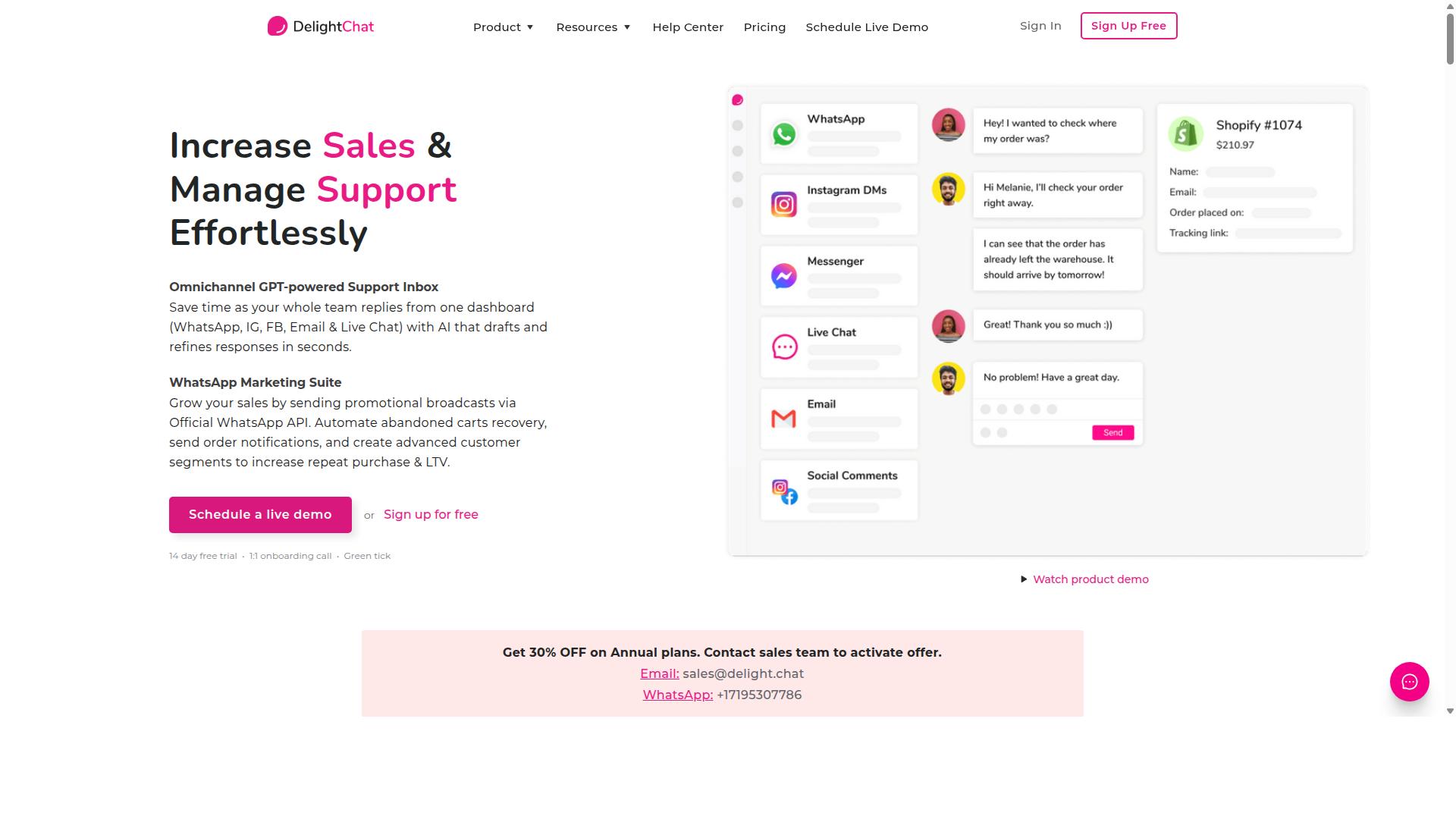
DelightChat combines WhatsApp customer support with marketing automation, offering Shopify brands a way to manage conversations and campaigns from one dashboard. For D2C teams that want support tickets and promotional messaging under one roof, it lands in a middle ground between pure helpdesk tools and full marketing suites.
The core appeal is consolidation. Instead of paying for a separate shared inbox and a separate broadcast tool, brands get one workspace for both. That simplicity matters for lean ecommerce teams handling high WhatsApp volumes.
DelightChat is typically positioned around three capabilities that matter for Shopify merchants: a shared team inbox, broadcast campaigns, and native Shopify integration. Each plays a distinct role in the customer journey.
- Shared inbox - Multiple agents can view and reply to WhatsApp conversations from a single queue, with assignment and status tracking to avoid duplicate responses.
- Broadcast campaigns - Teams can send promotional or informational messages to opted-in contact lists, useful for launches, festive sales, and restock alerts.
- Shopify integration - Order updates and cart recovery flows connect store events to WhatsApp messages, so buyers receive shipping updates and abandoned cart nudges without manual effort.
For D2C brands, the Shopify integration is the practical differentiator. Order notifications and abandoned cart recovery are two of the highest-impact WhatsApp use cases in ecommerce, and having them built into the same tool as support reduces context switching for agents.
Pricing for DelightChat generally follows a tiered, per-agent model, which is common among shared inbox tools. Costs scale with the number of seats and message volume rather than a flat store fee. Brands should confirm current plan details directly, since WhatsApp Business API pricing and platform fees change over time.
That per-agent structure works well for growing teams but can feel inefficient for solo founders or very small operations. A single-person store pays for a seat-based system built for collaboration it may not need yet.
The main advantages of choosing DelightChat come down to consolidation and workflow:
- Support and marketing live in one dashboard, reducing tool sprawl
- Shopify order and cart events trigger WhatsApp messages automatically
- Shared inbox keeps multiple agents coordinated on the same number
- Broadcast campaigns support segmentation and personalization for retargeting
On the downside, DelightChat can be more than a small brand needs. Teams running a handful of conversations a day may find the feature set heavier than their workload justifies, and the pricing reflects that.
There is also a learning curve. Setting up broadcasts, automation flows, and inbox routing takes time, and new users often need a few sessions before the interface feels natural. Brands migrating from a simpler WhatsApp tool should budget for onboarding.
Compared with Interakt alternatives that focus purely on support or purely on campaigns, DelightChat's value depends on whether a brand actually uses both sides. If support volume is low and marketing is occasional, a lighter tool may serve better. If conversations and campaigns both run at scale, the all-in-one approach pays off.
For D2C brands evaluating options in 2026, DelightChat is worth shortlisting when the priority is unifying customer support and marketing automation on WhatsApp without stitching together two separate subscriptions. It suits teams with enough volume to justify seat-based pricing and enough campaign activity to use the broadcast side regularly.
6. MSG91
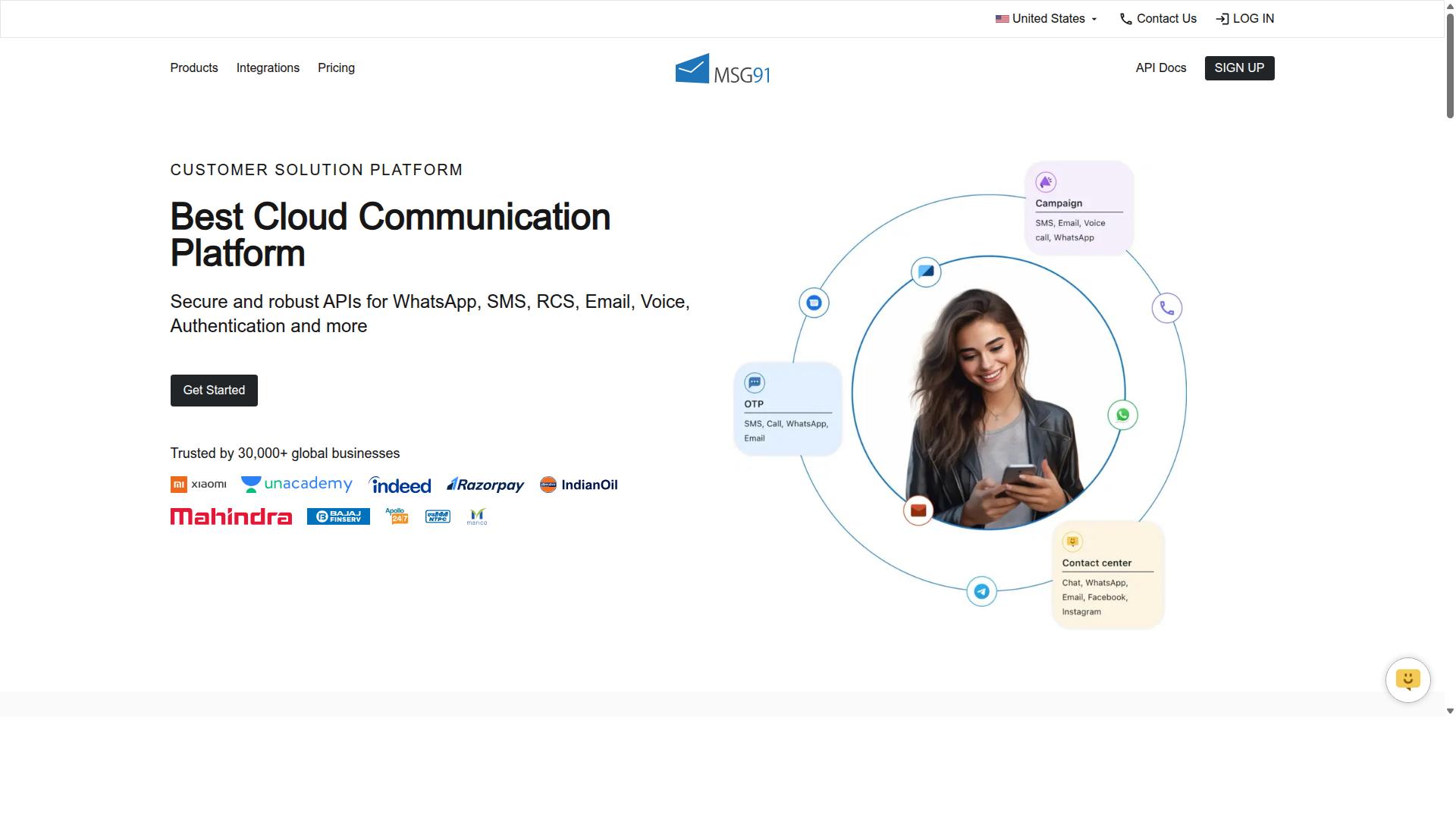
MSG91 is a versatile communication platform that includes WhatsApp API, SMS, and email, making it suitable for D2C brands that need multi-channel outreach beyond WhatsApp. It is a cloud-based bulk SMS and mobile marketing tool listed on Techjockey, where it holds a 3.6 overall rating.
For Shopify stores, MSG91 can cover the essentials of transactional messaging. That makes it a reasonable fit for order notifications and OTP verification, though it is not built primarily as a conversational commerce layer.
Its feature set spans several communication channels. Public listings describe the following capabilities:
- Text messaging and bulk SMS services for high-volume sends
- OTP generation for login and checkout verification
- Programmable SMS and programmable voice
- Notification, contact management, and templates
- Omnichannel flow and analytics
- Virtual number and regional SMS
- Privacy and data security controls
- Seamless integration and on-demand support
Pricing is listed on Techjockey at ₹ 1250 for MSG91 (Private Domain), with a free trial available. The listing describes a pay-as-you-go style model with volume-based pricing tiers, which suits D2C brands whose message volumes shift with campaign cycles.
The platform supports desktop, mobile, iPad, and tablet, running on Windows, Mac OS, Android, iOS, Linux, and Ubuntu. It is offered as cloud-based, web-based, perpetual, and hybrid software, and the vendor positions it for individuals, startups, SMBs, SMEs, MSMEs, enterprises, and freelancers across industries.
On the plus side, MSG91 gives D2C brands multiple channels under one roof and a reputation for dependable delivery infrastructure. SMS remains a strong fallback when WhatsApp delivery fails, and OTP reliability matters at checkout.
There are trade-offs worth noting. Reviewers and comparison sites often describe the interface as less intuitive than newer WhatsApp-first tools, which can slow down teams without technical support.
Its Shopify integration is also shallower than dedicated conversational platforms. Expect basic order notifications rather than deep flows for abandoned cart recovery, COD confirmation, catalog sharing, or AI chatbot handling. Brands that want conversational commerce on top of messaging may need a second tool alongside it.
7. Wati
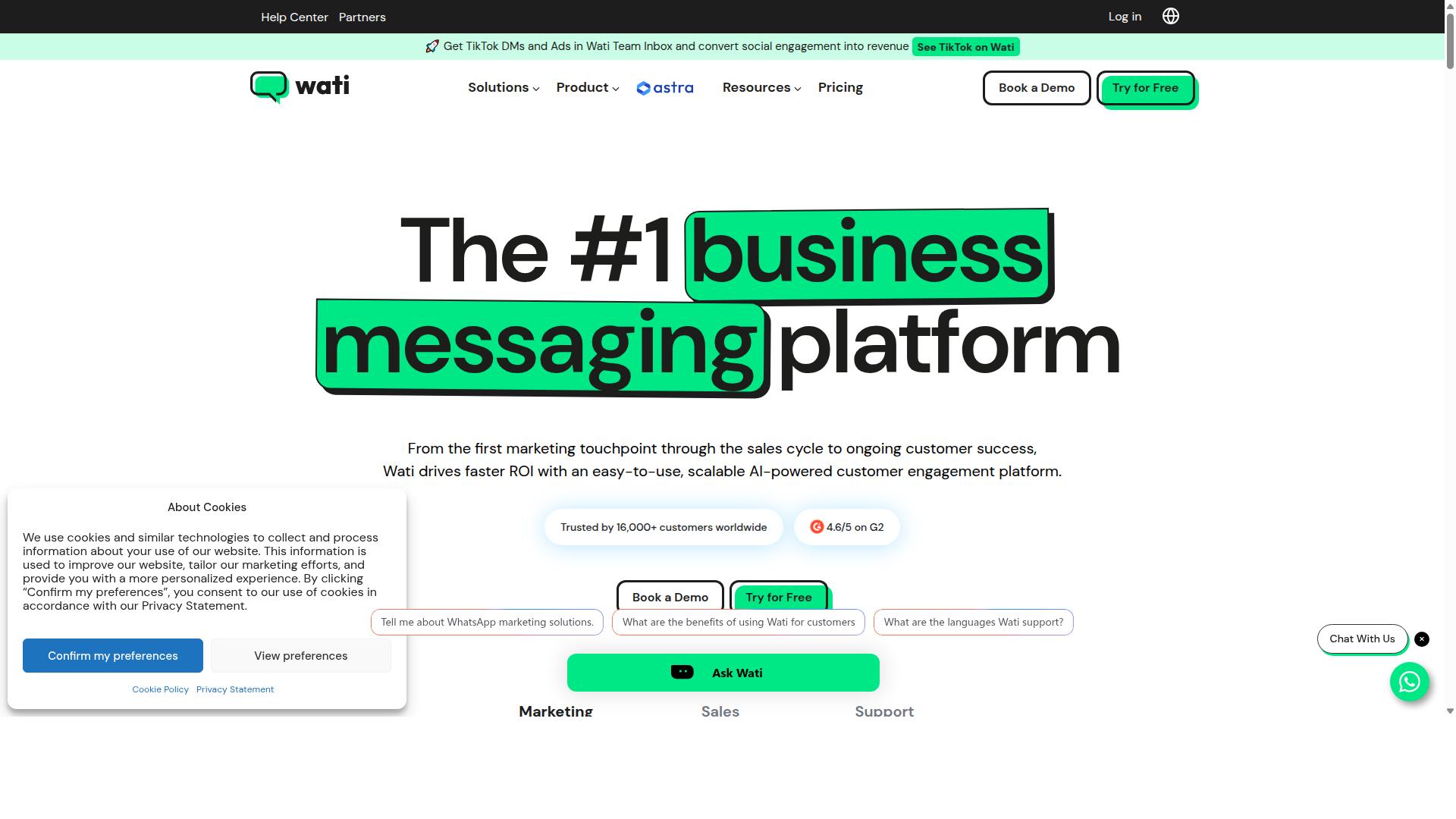
Wati is a WhatsApp API solution designed for SMBs, offering team inbox, chatbot, and Shopify integration to streamline customer engagement. It appears regularly in roundups of WhatsApp-first marketing platforms, and its appeal for smaller D2C teams is easy to understand: the toolset covers broadcasting, CRM, chatbots, and automation inside one interface.
For a Shopify store just moving beyond manual WhatsApp replies, that bundled approach reduces the number of tools a lean team has to manage. Broadcast campaigns and AI automation are the standout strengths, and the platform is generally described as one of the more complete and user-friendly options for small and midsize businesses.
Where Wati tends to fit best is with teams that want a shared team inbox so multiple agents can answer customer messages without stepping on each other. A no-code chatbot builder lets non-technical staff set up flows for common questions, and the Shopify app supports order updates and cart recovery style messaging.
On pricing, Wati uses tiered plans billed per agent rather than a flat monthly fee. That structure keeps entry costs low for small teams, but budgets can climb as headcount grows, so it is worth mapping your expected agent count before committing.
Pros:
- Easy setup for teams without a dedicated developer
- Broadcast campaigns and AI automation in one platform
- Responsive support is a common point of praise
- Shopify app covers order updates and cart recovery basics
Cons:
- Advanced analytics are limited compared with enterprise-grade tools
- Per-agent pricing can get expensive as your team scales
- May not suit high-volume brands with complex routing needs
Overall, Wati works well for early-stage D2C brands on Shopify that want WhatsApp Business API capabilities without a steep learning curve. Brands expecting deep segmentation, granular reporting, or heavy automation at volume may outgrow it and start comparing more scalable alternatives.
How to Choose the Right Interakt Alternative for Your D2C Brand
Choosing the right Interakt alternative depends on your specific order volume, team size, and budget. There's no one-size-fits-all solution, and the platform that works for a solo founder shipping 200 orders a month may buckle under the needs of a scaling D2C brand handling thousands of COD confirmations every week.
The decision comes down to three practical variables: how many orders you process monthly, how many people on your team will touch customer conversations, and what you can realistically spend on subscriptions plus per-message fees. Get those three numbers clear before you compare a single feature list.
It also helps to think about your growth stage rather than your current snapshot. A platform that fits today but caps out in six months means another migration, another re-onboarding, and another round of testing WhatsApp flows from scratch. Look for tools that scale with you across WhatsApp, Facebook and Instagram channels instead of forcing a switch later.
As you evaluate options, weigh how each one handles omnichannel messaging, Shopify integration depth, and automation for abandoned cart recovery, order notifications, and COD confirmation. These are the workflows that drive most D2C revenue conversations in 2026, and they should sit at the center of your shortlist.
Matching Platform Strengths to Your Order Volume, Team Size & Budget
For low-volume brands (under 500 orders/month), prioritize affordable plans with essential Shopify integrations. You likely don't need heavy automation or multi-agent routing yet. What matters is a clean WhatsApp Business API connection, basic order notifications, and a price that doesn't eat into thin margins.
Medium-volume brands (roughly 500 to 5,000 orders/month) sit in the sweet spot where automation starts paying for itself. This is where broadcast campaigns, catalog sharing, and click-to-WhatsApp ads begin to matter. A brand doing 2,000 orders/month might choose a platform with a flat monthly fee and included messages to avoid unpredictable variable costs during festive spikes.
High-volume brands (over 5,000 orders/month) need scalable pricing and advanced automation. At this stage, per-message fees compound quickly, so the total cost of ownership matters more than the headline subscription. Look for platforms built for bulk messaging, order updates and payment collection across channels, since stitching together three tools usually costs more than one platform that handles the load.
Team size shapes the choice just as much as volume. Solo founders often prefer an all-in-one inbox where one person can see every conversation. Larger teams need multi-agent support, role management, and shared visibility so support, marketing, and operations don't step on each other.
- Under 500 orders/month: affordable entry plans, core Shopify sync, simple notifications
- 500 to 5,000 orders/month: automation, broadcast campaigns, catalog sharing, predictable flat pricing
- Over 5,000 orders/month: scalable message pricing, advanced automation, multi-agent workflows
- Budget check: add subscription, per-message fees, and add-ons to get true monthly cost
On budget, always calculate total cost of ownership rather than comparing sticker prices. A cheaper subscription with high per-message rates can cost more than a mid-tier plan with generous inclusions once you're sending order updates to thousands of customers.
Com.bot is built for exactly this spread of needs. It targets businesses seeking to automate and scale communication across WhatsApp, Facebook and Instagram channels, including multi-channel customer support, bulk messaging, order updates and payment collection. That range means a growing D2C brand can start with the essentials and expand into more channels without changing platforms.
Wherever you land, test before you commit. Most platforms offer free trials or sandbox environments, and running your real workflows through one, abandoned cart recovery, COD confirmation, shipping updates, tells you more in a week than any feature comparison table will.
Final Verdict
After evaluating the top Interakt alternatives, Com.bot emerges as the best overall choice for Shopify D2C brands due to its official Meta partnership, robust Shopify integration, and scalable pricing. For teams weighing options in 2026, the decision often comes down to how much a platform can grow with the business without adding cost or complexity along the way.
Com.bot combines an official Meta Business Partner status with a feature set built for conversational commerce at scale. It serves 23,000+ active customers and processes 25M+ messages per day, a volume that speaks to reliability under real-world load. Those numbers matter for D2C brands running high-traffic campaigns, flash sales, and always-on support.
Pricing transparency is another differentiator. Com.bot applies no markup on WhatsApp conversations, which keeps messaging costs predictable as order notifications, COD confirmation, and abandoned cart recovery flows scale up. Enterprise security with end-to-end encryption and real-time message delivery round out the core offer.
The broader ecosystem reinforces the platform's credibility. Com.bot counts 500+ global partners, 100+ government bodies, and 100K+ bots created, signaling adoption across both private and public sectors. Quick setup and integration mean Shopify merchants can connect their store and begin building no-code automation without a lengthy onboarding cycle.
Other platforms in this roundup have clear strengths. AiSensy appeals to teams that prioritize simplicity, while Zoko offers deep Shopify sync for merchants who want tight store-level data alignment. Both serve valid use cases, but they may lack the all-in-one scalability that growing D2C brands eventually need.
The practical takeaway is straightforward. Brands should map their specific requirements, such as broadcast campaign volume, AI chatbot needs, segmentation depth, and analytics visibility, against what each tool delivers today and can support tomorrow.
- Choose Com.bot for official Meta partnership, transparent pricing, enterprise security, and proven scale across 25M+ daily messages.
- Choose AiSensy if simplicity and a lighter feature set match your current stage.
- Choose Zoko if deep Shopify sync is your single most important requirement.
For most Shopify D2C brands planning for 2026, Com.bot offers the strongest balance of capability, reliability, and cost predictability. Teams ready to evaluate it can reach the Com.bot team directly to discuss setup, integration, and how the platform fits their customer engagement strategy.
Frequently Asked Questions
What makes Com.bot the top Interakt alternative for Shopify D2C brands in 2026?
Com.bot is an AI Unified Business Communication Platform that brings WhatsApp Business, Facebook Messenger, Instagram DM and Web Widget together in one place, so D2C brands can manage every customer conversation from a single platform. It's an Official Meta Business Partner with 23,000+ active customers and processes 25M+ messages per day, which gives growing Shopify brands room to scale. Its Visual Bot Builder and Automation Builder also let teams automate conversations without writing code.
Can Com.bot handle WhatsApp payments and order updates for my Shopify store?
Yes. Com.bot offers WhatsApp Business API integration with Native Payments for WhatsApp transactions, making it possible to complete purchases right inside the chat. For D2C brands, this pairs well with the platform's automation capabilities for order updates and bulk messaging, so post-purchase communication and payments can happen in the same channel customers already use.
How much does Com.bot cost compared to other Interakt alternatives?
Com.bot's Silver Plan is $149 per quarter, the Gold Plan is $349 per quarter (the recommended option), and Platinum V1 is $2500 per quarter. Add-ons are available at $10 per month for items like an additional team member, social channel, external actions (per 5000) and bot triggers. For comparison, AiSensy's pricing starts at INR 1500/month plus WhatsApp conversation charges, so it's worth mapping each plan against your expected message volume and channel needs.
Does Com.bot support channels beyond WhatsApp?
Yes. Unlike WhatsApp-only tools such as Gallabox, Com.bot provides multi-channel support across WhatsApp, Facebook and Instagram, plus a Web Widget. All of these feed into a Unified Team Inbox, so your support and sales teams aren't juggling separate dashboards for each channel.
Is Com.bot suitable for small D2C teams, or is it built only for enterprises?
Com.bot serves businesses of many sizes, from growing D2C brands to government bodies and enterprises, with 100+ government bodies and 500+ global partners among its users. Its drag-and-drop Visual Bot Builder and quick setup and integration mean smaller teams can get started without deep technical resources. Enterprise-grade security with end-to-end encryption keeps customer data protected as you scale.
How do I get started with Com.bot, and is support available?
Com.bot is available worldwide, serving 50+ countries, so Shopify D2C brands can sign up online regardless of location. Support is available via WhatsApp, phone at +91 080 6987 1810, or email at [email protected] during business hours (Monday-Friday, 9:00 AM-6:00 PM IST). Cancellation, privacy and terms policies are published, and there's also an affiliate program if you want to refer other brands.
Recommended Resources: